A ward, plot by plot.
A plot that is not on the register pays nothing and nobody notices. Rounds, field staff and street assets have the same problem in a different shape: the work happens outside, and the record is written inside.
The register is the hard part. It always was.
A ward drawn plot by plot, on the ground rather than from a file. Hollow plots are on the register. Filled ones are not on it at all. Dashed ones are trading without a licence. Every one of them is a walk of a few minutes, and until the sheet exists, nobody knows which few minutes are worth walking.
Eight streets given. Six of them covered.
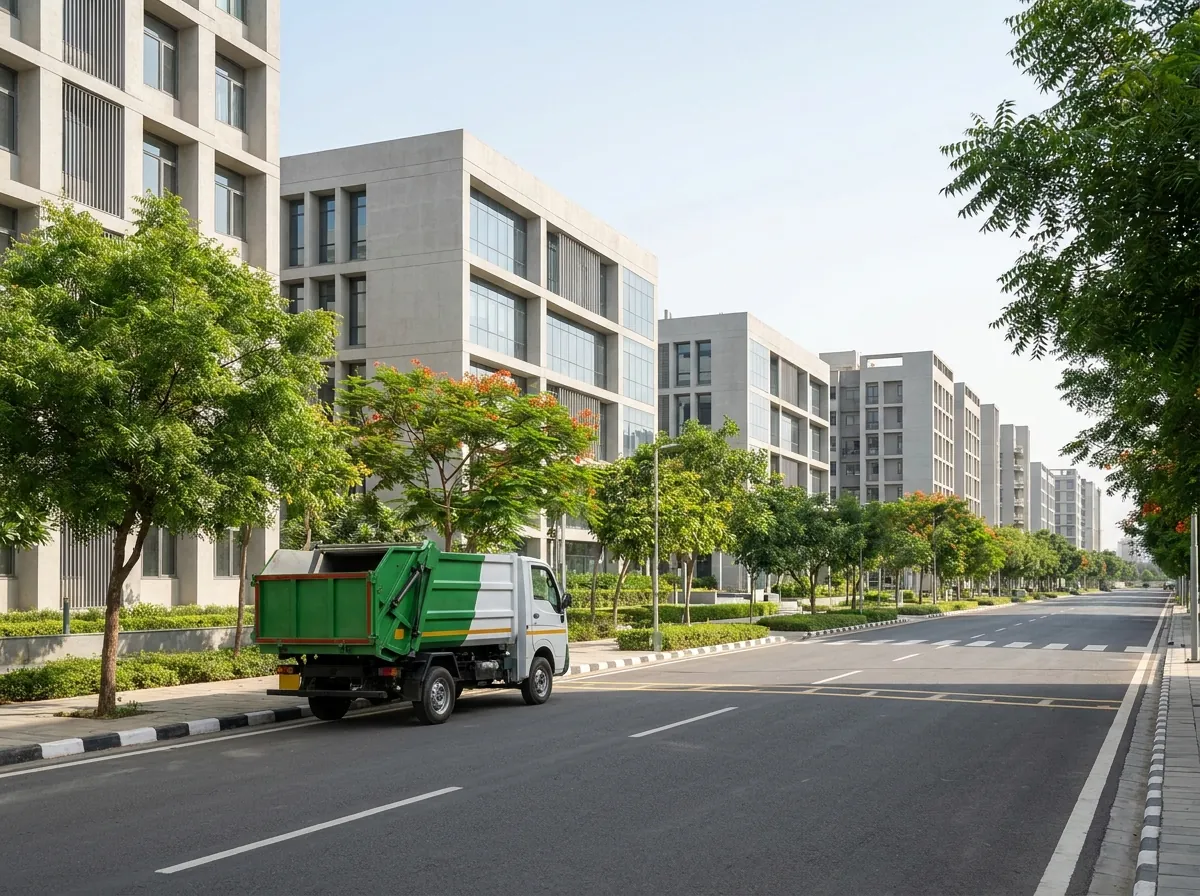
Vehicle tracking on collection rounds is not a new idea and we are not pretending it is. What is usually missing is the comparison: the route as given, next to the route as driven, on the same sheet, on the day it happened.
What the ward office cannot answer today.
What is standing on this plot?
Use, rough area, and whether the plot appears on the register at all. The plots that are missing from the register are the ones worth walking to first.
Did the round get run?
The route the vehicle was given against the route it actually covered, street by street. Two streets missed on a Tuesday is a fact rather than a complaint.
Does that shop hold a licence?
Licence status kept against the plot itself rather than in a separate file that nobody opens while standing in front of the shop.
How long has that light been out?
Each pole is an asset with a fault date. A complaint that is nine days old reads as nine days old, not as a fresh entry in a list.
Where was the crew?
Field staff attendance recorded where the work happened, with the round they were on, rather than a signature at the office.
Written outside, where the work is.
The gap in most municipal records is not software. It is that the survey was never done, or was done once and never again. Everything here is captured on the street, by the person standing on it.
Use, area, and whether it is on the register at all.
Route given against route covered, street by street, with times.
Attendance and position of the crew, taken where the work was.
Lights, poles, bins and hoardings, each with a fault date and an age.
Missed street, unlicensed shop, plot not on the register, light out for a week.
Any round, any day, with the track that was actually driven.
Runs on whatever is already fitted.
A handheld for the survey, a unit in the collection vehicle, a card or a tag for the crew, a tag on the assets worth tagging. Whatever a body has already bought gets read rather than replaced.
Start with one ward.
One ward, surveyed properly, plot by plot. That sheet is the thing everything else hangs off, and it is the thing that usually does not exist.
hello@prestag.com